


Latest News/ Updates
Deaprtmental Login
Activities & Initiatives

initiative of the Government of India to celebrate and commemorate 75 years of independence of progressive India

Who we are?
Gram Sabha Parishad is a campaign launched to ensure that the Rural & Urban services are made available to citizens electronically through improved online infrastructure and by increasing Internet connectivity or making the country digitally empowered in the field of technology. The initiative includes plans to connect rural areas with high-speed internet networks. It consists of three core components: the development of secure and stable digital infrastructure, delivering services digitally, and universal digital literacy.
Launched on 1 July 2015, by India, it is both enabler and beneficiary of other key schemes, such as BharatNet, Make in India, Startup India, Standup India, industrial corridors, Bharatmala and Sagarmala.
As of 31 December 2018, India had a population of 130 crore people (1.3 billion), 130 crore (1.3 billion) Aadhaar digital biometric identity cards, 150 crore (1.5 billion) mobile phones, 100.6 crore (446 million) smartphones, 130 crore (1.3 billion) internet users up from 481 million people (80% of the country's total population) in December 2017, and 71 per cent growth in e-commerce.


Rural development implies both the economic betterment of people as well as greater social transformation. Increased participation of people in the rural development programmes, decentralization of planning, better enforcement of land reforms and greater access to credit are envisaged for providing the rural people with better prospects. We believes in the spirit of partnership and has joined hands with community organization, civic bodies, corporate, educational and development institutions, as well as government to strengthen its cause and ameliorate the situation of underprivileged children and youths in India.
Being the nodal Department for most of the development and welfare activities in the rural areas, the Department of Rural Development plays a vital role in the overall development strategy of the State. The vision and mission of the Department is sustainable and inclusive growth of rural Tripura through a multipronged strategy for eradication of poverty by increasing livelihoods opportunities, providing social safety net and developing infrastructure for growth.
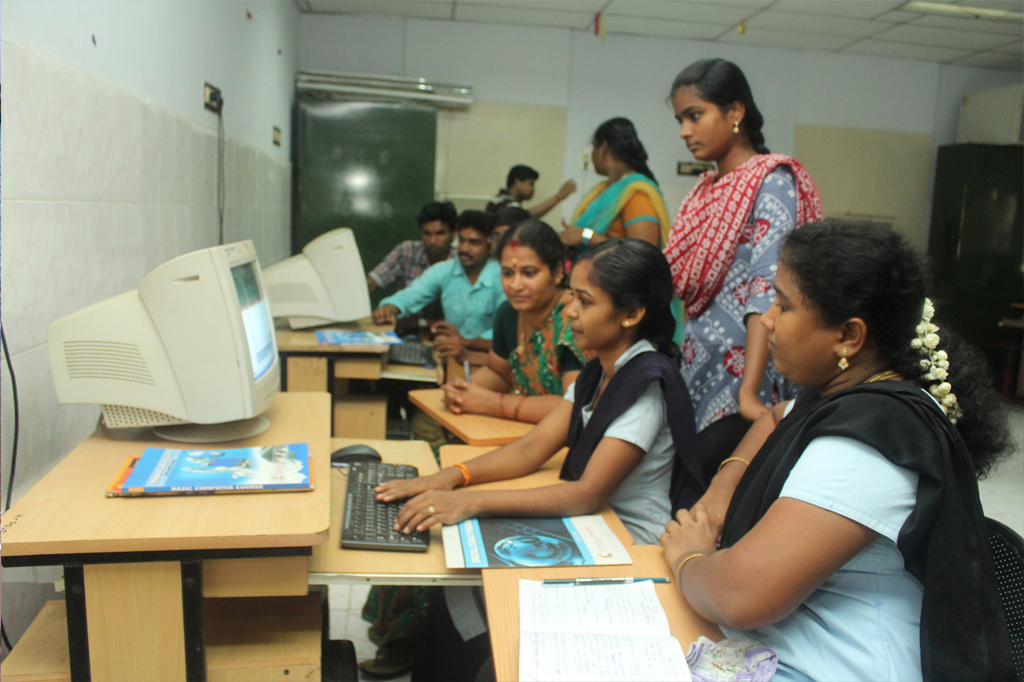
DIGITAL LITERACY INITIATIVES
STRENGTHENING THE DIGITAL INDIA VISION OF THE NATION ICT ACADEMY HAS BEEN FOCUSING ON DIGITAL LITERACY AS A KEY PILLAR BENEFITTING THE CITIZENS, TEACHERS, STUDENTS IN ENABLING THEM TO LEAD AN EFFECTIVE LIFE IN THE DIGITAL WORLD.
Aims of Gram Sabha Parishad are:
- Providing livelihood opportunities to those in need, including women and other vulnerable sections with focus on marginalized households.
- Enhancement of livelihood security of households in rural areas by providing at least 100 days of guaranteed wage employment in every financial year to every household demanding employment.
- Connecting all rural habitation with all and upgradation of roads weather existing roads to provide market access.
- Providing basic housing and homestead to all vulnerable household in rural areas.
- Providing social assistance to the elderly, widow and disabled persons.
- Providing urban amenities in rural areas for improvement of quality of rural life.
- Developing skill, Capacity and important development and training of rural development functionaries.
- Promoting involvement of voluntary agencies and individuals for rural development.
- Watershed development for initiating effective land reform measures for providing land to the landless rural poor.
Origin
Gram Sabha Parishad is a combination of the provisions under the Employment Assurance Scheme (EAS) and Gram Samridh Yojana (GSY).
The Food For Work Programme was restructured and renamed as Rural Employment Programme in October. The Programme was launched during the Sixth Five Year Plan. It aims the implementation of additional employment to under employed persons. Central-state contribution was on the basis of 50:50 ratio. In 1989 was merged with Jawahar Rozgar Yojana.
This was a consolidation of the previous employment programs and it was largest National Employment Program of India at that time with a general objective of providing 90-100 Days Employment per person particularly in backward districts. People below Poverty Line were main targets. The Yojna was implemented on rural scale. Every village was to be covered through Panchayati Raj Institutions. The village got aide and support from District Rural Development Authority. Expenditures were born by central & state in 80:20 ratios.
Since 1993-94 the Yojna was made more targets oriented and expanded substantially through increased budgetary allocations. It was divided into 3 streams.
This Abhiyaan of 125 days, will work in mission mode, will involve focused implementation of 25 categories of works/ activities in 116 districts, each with a large concentration of returnee migrant workers in 6 states of Bihar, Uttar Pradesh, Madhya Pradesh, Rajasthan, Jharkhand and Odisha. Public works to be undertaken during this campaign will have a resource envelope of Rs. 50,000 crores.
The Abhiyaan will be a convergent effort between 12 different Departments, namely; Rural Development, Panchayati Raj, Road Transport & Highways, Mines, Drinking Water & Sanitation, Environment, Railways, Petroleum & Natural Gas, New & Renewable Energy, Border Roads, Telecom and Agriculture, to expedite implementation of 25 public infrastructure works and works relating to augmentation of livelihood opportunities. The major objectives of the initiative include:
- Provide livelihood opportunity to returning migrants and similarly affected rural citizens
- Saturate villages with public infrastructure and create livelihood opportunities viz. Roads, Housing, Anganwadis, Panchayat Bhavans, various livelihood assets and Community Complexes among others
- The basket of a wide variety of works will ensure that each migrant worker is able to get an opportunity of employment according to his skill, in the coming 125 days. The Program will also prepare for expansion and development of livelihoods over a longer term.
The vision and strategy model
All pillars are interconnected and mutually complementary. The main objective of each city is a strong economic position, and this has been primarily taken into account in the model’s creation. By “strong economic position,” we mean not only economic growth but also economic development, which is a reflection of progressive change in the socioeconomic social structure. The transport and communication pillar has been incorporated into the model because transport is part of the environment, and as a tertiary industry, it contributes greatly to economic development and the interconnection of different places. Transport and communication infrastructure has to meet the needs of economic development.
In addition to adequate construction and the technical state of the transport network, there is a need for good-quality and high-capacity roads, which have a positive impact on economic activities and traffic accessibility. An important role must also be given to environmental protection in the creation of the long-term development vision and strategy. The environment pillar thus includes the prevention of biodiversity loss as well as the implementation of efficient and smart electric power grids and the development of a more competitive low-carbon economy, which efficiently and sustainably uses resources and other forms of environmental protection. The fourth important pillar of the vision and strategy model is education. It is a fact that we live in a knowledge-based society and that the skills of residents influence their lives in the greatest possible way. We are all aware that knowledge is the best investment; therefore, personal development and growth have also been included in the vision and strategy model. The last pillar of the model is the quality of life, including cultural events, accessible sports and recreational facilities, social activities, residence safety, neighborly relations, and spiritual care. In all phases of the model, attention is directed toward the above-mentioned pillars, and each step of the model is structured around those pillars. The model methodology demands the completion of a structured questionnaire among various interest groups, a field survey on residents’ life satisfaction, a survey for the definition of the selected city’s identity (recognizability), and an analysis of existing statistical indicators for the city. Below, we present an example step-by-step representation of the vision and strategy model.

The above lines clearly state two biggest problems of Rural Health Care, one is the affordability and the other is its accessibility. With a pledge to resolve the two biggest hurdles in Rural India, Gram Sabha Parishad Health Care was set up.A greater part of Indian Rural population doesn't approach essential medical services facilities because of absence of qualified clinical experts, and for all intents and purposes non-existent Medicare framework. Gram Sabha Parishad Health Care is India’s first and prominent health care system that aims to provide medical and healthcare facilities and services to last mile of the country.
Gram Sabha Parishad, started in 2015 is currently one of the largest primary Health care companies in Rural India. A 24/7 medical consultation has made villages a sustainable and reliable health care model all across the nation. Our Ray of Reach has been expanded by our Gram Sabha Parishad Franchise Model, through which we host the never ending problem of quality medicines at defined and affordable prices, where we create a process based system with the help of technology to deliver best of Gram Sabha Parishad Franchise’s Products and Services.
We believe that any healthcare model should go beyond an episode-based aid to creating a continuum of care. Taking best from the technology, Gram Sabha Parishad today caters to more than 1000 villages with its physical presence through its polyclinics, pharmacies and Primary Clinics.
Gram Sabha Parishad has created an ecosystem which links well educated and professional doctors and nurses, and collaborations with various renowned partners, with a goal to serve and reach to less privileged fellow citizens of the country. With the strong willpower and immense dedication of the team, Gramin has succeeded in setting up health care clinics across 12+ states and still counting, creating a heavy impact over rural livelihoods.
Frameworks
The creation, integration, and adoption of smart city capabilities require a unique set of frameworks to realize the focus areas of opportunity and innovation central to smart city projects. The frameworks can be divided into 5 main dimensions which include numerous related categories of smart city development:
Technology
A smart city relies heavily on the deployment of technology. Different combinations of technological infrastructure interact to form the array of smart city technologies with varying levels of interaction between human and technological systems.
- Digital: A service oriented infrastructure is required to connect individuals and devices in a smart city. These include innovation services and communication infrastructure. Yovanof, G. S. & Hazapis, G. N. define a digital city as "a connected community that combines broadband communications infrastructure; a flexible, service-oriented computing infrastructure based on open industry standards; and, innovative services to meet the needs of governments and their employees, citizens and businesses."
- Intelligent: Cognitive technologies, such as artificial intelligence and machine learning, can be trained on the data generated by connected city devices to identify patterns. The efficacy and impact of particular policy decisions can be quantified by cognitive systems studying the continuous interactions of humans with their urban surroundings.
- Ubiquitous: A ubiquitous city provides access to public services through any connected device. U-city is an extension of the digital city concept because of the facility in terms of accessibility to every infrastructure.
- Wired: The physical components of IT systems are crucial to early-stage smart city development. Wired infrastructure is required to support the IoT and wireless technologies central to more interconnected living. A wired city environment provides general access to continually updated digital and physical infrastructure. The latest in telecommunications, robotics, IoT, and various connected technologies can then be deployed to support human capital and productivity.
- Hybrid: A hybrid city is the combination of a physical conurbation and a virtual city related to the physical space. This relationship can be one of virtual design or the presence of a critical mass of virtual community participants in a physical urban space. Hybrid spaces can serve to actualize future-state projects for smart city services and integration.
- Information city: The multiplicity of interactive devices in a smart city generates a large quantity of data. How that information is interpreted and stored is critical to Smart city growth and security.
What are the Objectives of Rural Development in India?
With the concept of rural development explained, let’s move on to what rural development aims to achieve. First of all, decision-making entities ensure positive durable changes to boost the economy of a rural area. As a result, dedicated areas will witness a long-lasting growth pattern that is likely to reduce poverty rates.
However, the primary objectives of rural development include the following – To promote economic growth among the rural population through adequate access to food, shelter, clothing, education, and employment. With proper opportunities proportional to the same in urban areas, individuals residing in rural areas will be able to get a level ground for income options.
To introduce modern techniques for agriculture in rural areas to contribute to an increased productivity rate. As a result, the role of rural development is to establish sustainable and affordable technology to increase production in a national market.
To ensure consistent rural infrastructure development in India. In addition, this process should involve all local rural populations. Consequently, they will gain the agency to make large-scale economic decisions that lead to area-based financial development.
To bridge the gap between local governing bodies and the Central administration for better economic communication. On top of that, rural development aims to provide executive powers to panchayats for carrying on the policies framed by experts.
Finally, the objective of rural development is to use natural resources within a territory to ensure maximum economic benefit for inhabitants. This also includes important land reform measures to boost the agricultural output and productivity of every individual involved.
Now that we know what the concept of rural development in India aims to achieve, let’s progress to the elements that impact rural growth.
What are the Factors that Affect Rural Development in India?
Multiple factors contribute to the urban development of India. However, in-depth knowledge of knowledge and knowledge development will certainly help students understand the ingredients of rural progress.
As a result, they will be able to pinpoint the nature of factors that have a direct impact on rural development. Therefore, factors affecting the rural development in India are duly stated below –
Infrastructure – The infrastructural condition of a rural area has a direct link with its scale of development. Primarily, infrastructure consists of pucca roads, a consistent supply of electricity, and availability of transport.
With these factors, governing bodies have been able to reduce connectivity issues related to these areas. As a result, there has been an increase in the efficiency of the supply of agricultural output to mainland markets all over India. Therefore the opportunity of income increases among the rural residents.
Education – It is quite obvious that the level of education plays an integral role in the overall progress of rural areas. First of all, education introduces one to new and innovative ideas to improve his/her social condition. Educating the rural population at an early age ensures that there is no discrimination between the urban and rural populations. Therefore, they are open to countless employment opportunities from multiple sectors and industries.
Healthcare – Needless to say, healthcare is an important part of rural development in India. The rural population is often susceptible to diseases that can be avoided with proper healthcare measures. Besides, this contributes directly to their productivity.
As a result, they will be able to participate in healthy competitions in the market. Proper healthcare systems also reduce the mortality rate, thus ensuring a healthy and meaningful life.
Technology – The role of technology in rural development is indisputable. First of all, modern production techniques in various sectors can actively increase their rate of production, which allows for a remarkable rise in the scale of economic activities in rural areas. On the other hand, the technology significantly reduces irrigation and quality issues. Therefore, the presence of appropriate technological means such as pumps, tractors is the make-or-break factor of rural development.
In addition, access to clean drinkable water and sanitation is a must for the development of rural areas. In this way, rural residents will be able to benefit from equal income opportunities and sustainable healthcare services.
How to Ensure the Rural Development of India?
The Government of India has launched multiple projects on rural development in India over the decades. The keys to sustainable rural development in terms of economic situation include the following –
- Proper presence of advanced facilities for irrigation to all land types in India. As a result, farmers can boost their agricultural output and create economic opportunities for themselves.
- Credit facilities on access to the necessary ingredients of farming such as fertilizers, pesticides, and seeds. Subsidies on electricity used for farming purposes ensure that the rural population saves more than it spends.
- Combat with social inequalities and discrimination in rural areas to create a sense of unity. This sense of social unity will lead to the formation of an economic class whose aim is to boost production and ensure rural development.
- Make sure that there are adequate training sessions for farmers to equip them with modern agricultural measures. Besides, farmers should also be aware of agricultural policies, land reforms, and market prices for the best use of their resources.
- In addition, any improvement in current agricultural markets also makes sure that they can accommodate the economic contribution of the rural population. In these ways, one can ensure a sustainable growth curve and desirable rural development of India.
- For an in-depth insight into the factors that determine rural progress in India, go through the study materials available on our website. You can also install the Vedantu app to help you with your classes.
Scope of Rural Development
Since times immemorial India has been continuing to be and will remain in the future land of village communities. That is why Mahatma Gandhi rightly stated that" India lives in villages"If the village Perishes India will too Perish. Most of the people in India live in rural areas and any strategy of social-economic development in India that neglects rural people and rural areas cannot be successful. It is a sine -qua -non of the development of India.
Rural development is a result of interchanges between various physical, technical, economic, social, cultural, and institutional factors. Rural development is continuously designed to improve the economic and social well-being of rural people.